

The fitness class you wish you started sooner! Many people picture water aerobics as a…
Transverse Myelitis Rehabilitation
Understanding Transverse Myelitis
A Guide by Gino Alho Biokinetics
Biokinetics treatment forms an integral part of Transverse Myelitis Rehabilitation, read more below.
What is Transverse Myelitis?
The spinal cord is the pathway, responsible for communication between the brain and the rest of the body.
Transverse Myelitis (TM) is a rare neurological condition, where the immune system mistakenly targets the spinal cord, leading to inflammation of the spinal cord and nerve damage.
- “Transverse” refers to the way inflammation spreads across the width of the spinal cord.
- “Myelitis” means inflammation of the spinal cord itself, resulting in damaging of the myelin sheath (Insulating fibres of nerve cells)
Inflammation damages this pathway, and as a result, communication is disrupted, movement, sensation, sometimes even bladder and bowel function is negatively affected.
What Causes Transverse Myelitis?
In many cases, TM is idiopathic; the exact cause is unknown. However, it is often associated with underlying conditions such as :
- Multiple sclerosis (MS)
- Viral or bacterial infections
- Autoimmune disorders
- Neuromyelitis optica (NMO) – disease where the immune system attacks the central nervous system, targeting the optic nerves and spinal cord.
- Post-vaccination immune responses (rare)
Common Symptoms
Symptoms can develop rapidly (within hours or days) or more gradually over weeks, varying in severity. With some people recovering fully, while others may experience long-term mobility challenges. Symptoms may include:
- Sudden weakness in the legs and/or arms
- Difficulty walking
- Muscle stiffness or spasms
- Numbness or tingling
- Altered sensation (burning, hypersensitivity, or reduced feeling)
- Bladder and bowel dysfunction
- Sexual dysfunction
- Pain in the lower back or limbs
How Transverse Myelitis Changes a Person’s Life
TM can be physically, emotionally, and socially life-altering as recovery is often unpredictable. Some patients improve significantly within months, while others may experience permanent neurological deficits.
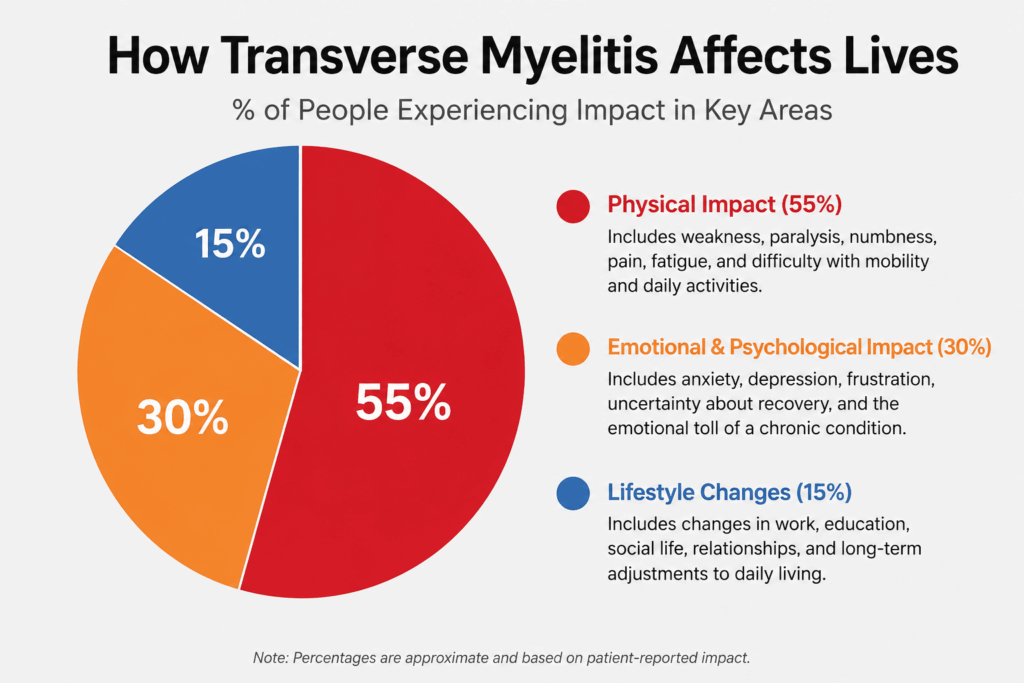 Physical Impact:
- Reduced independence
- Difficulty performing daily tasks
- Increased fall risk
- Fatigue
- Muscle deconditioning
Emotional & Psychological Impact:
- Anxiety about recovery
- Depression linked to loss of function
- Fear of movement
- Social withdrawal
Lifestyle Changes:
- Work limitations: Physically demanding occupations, such as mechanics, builders, or biokineticists, may become difficult or no longer possible depending on the severity of symptoms.
- Home adaptations: Modifications to the home environment, such as wheelchair-accessible bathrooms and ramps, may be required to improve safety and independence.
- Increased reliance on support systems and assistive devices: Some individuals may require mobility aids such as wheelchairs, while others may need daily assistance from caregivers or family members.
Is There a Cure?
Currently, there is no specific cure for Transverse Myelitis; yet treatment is strongly determined by the underlying cause/condition as mentioned above. This is where structured, clinical exercise therapy plays a vital role of long-term recovery, along with a multi-disciplinary approach to rehabilitation. Rehabilitation might include sessions with Biokineticists; Occupational-; Speech- and or Physiotherapists as well as Psychologists; depending on the severity of condition.
Cause Dependent Treatment :
- Multiple Sclerosis (MS) : TM as a symptom of MS, requires treatment that involves acute steroids, followed by long-term disease-modifying medications to prevent future flairs and manage the condition.
- Infections : Viruses like herpes, HIV, or West Nile can be a cause of TM. These infections are typically treated with antiviral medication, while bacterial infections may require antibiotics.
- Autoimmune Diseases (Other than MS): Conditions such as Neuromyelitis Optica (NMO) often require specialized immunotherapy, such as rituximab, which differs from the standard treatment approach used for multiple sclerosis (MS).
- Idiopathic (Unknown) TM: As no specific cause can be identified, treatment is therefore aimed at managing acute symptoms, reducing inflammation, and suppressing the immune response
Depending on the severity of symptoms, progress, recovery may continue for up to two years or longer, and even if little improvement is seen within the first 3–6 months, ongoing rehabilitation remains crucial to preserve or improve function, maintain independence, and manage chronic symptoms.
The Role of Biokinetics in Transverse Myelitis
At Gino Alho Biokinetics, rehabilitation does not stop at “movement” — it focuses on restoring independence, rebuilding strength, and improving quality of life. See what other services a Biokineticist offers.
A biokineticist plays a key role in:
-
Restoring Muscle Strength
When the immune system mistakenly attacks healthy neural tissue, it can lead to muscle weakening due to limited stimulation/use, reduced strength, and impaired movement mechanics. Through progressive and individualized exercise rehabilitation programs, a biokineticist helps patients to rebuild muscle function to improve movement quality, and restore physical capacity.
We make use of technology, such as a VALD Dynomometer, that is used to objectively assess and monitor muscle strength. These advanced assessment devices allow for accurately tracked rehabilitation progress over time. As well as compare strength differences between limbs, and benchmark results against normative values for individuals of the same age and gender. This provides more precise rehabilitation planning and measurable feedback throughout recovery.
-
Improving Balance & Coordination
Transverse myelitis often affects proprioception — the body’s non-visual awareness of position and movement — due to inflammation and damage within the spinal cord. As a result of the neural pathways that become disrupted, individuals may experience poor balance, reduced coordination, instability during movement, and an increased risk of falls. Muscle weakness, altered sensation, and delayed nerve signalling can further contribute to difficulties with balancing and everyday functional tasks.
A biokineticist plays an important role in retraining these affected neural pathways through targeted balance and coordination exercises. By using progressive rehabilitation techniques, the nervous system is encouraged to form and strengthen new neural connections. As a result, this helps to improve movement control and body awareness over time. Specific balance retraining not only reduces fall risk, but also improves mobility, independence, and confidence during daily activities
-
Gait Retraining
Refers to prescribed exercises designed to correct abnormal walking or running patterns. Significant Walking (Gait) difficulties usually arise as a result of muscle atrophy (loss of muscle mass), weakness, impaired balance, and reduced coordination caused by damage to the spinal cord, individuals with transverse myelitis often experience significant walking difficulties. Disrupted neural communication between the brain and muscles can lead to :
- Altered gait patterns
- Poor foot clearance
- Reduced walking endurance
- Instability
- Increased risk of falls
In some cases, spasticity and sensory loss may further affect the ability to walk efficiently and safely.
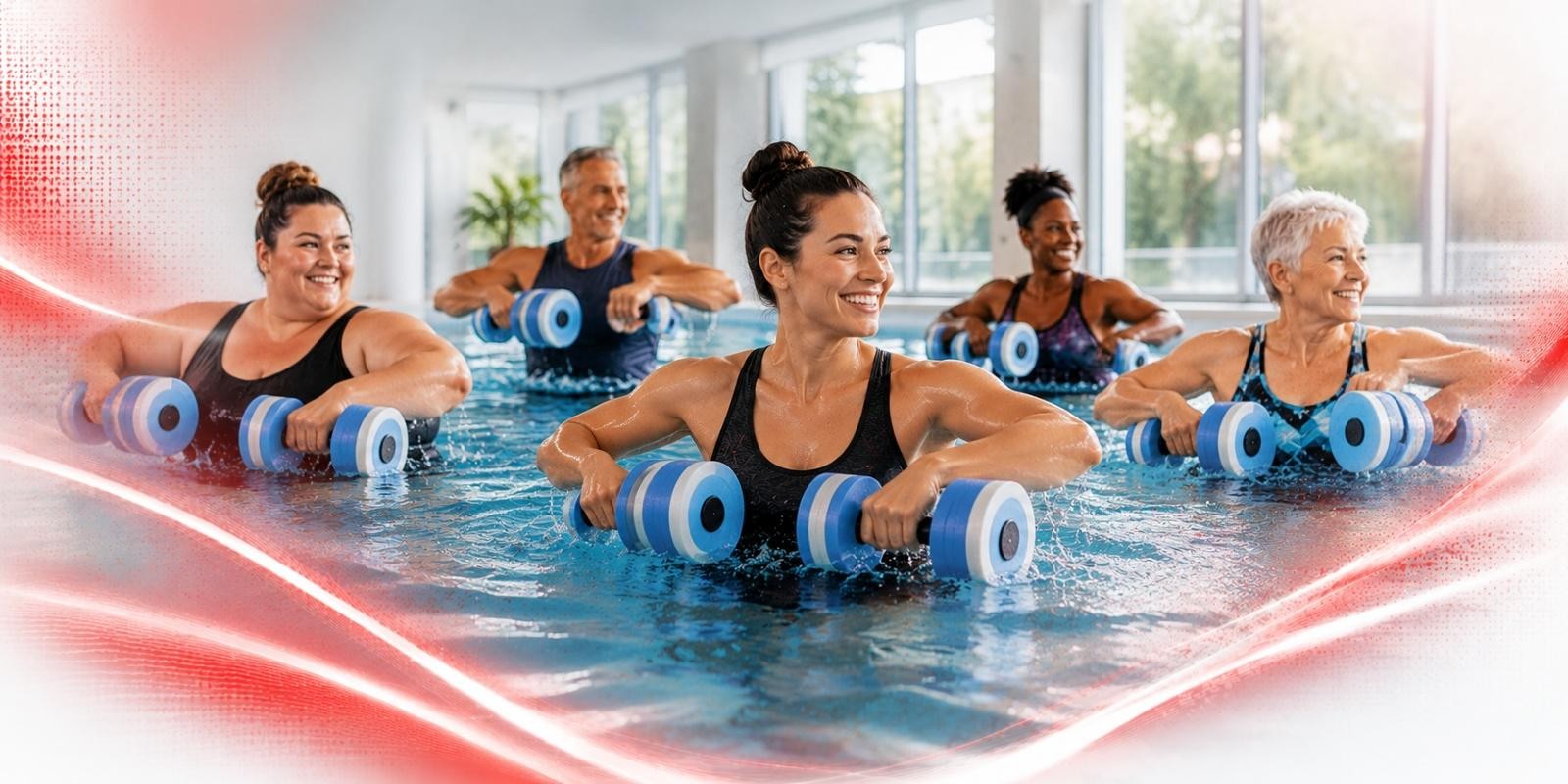
A biokineticist assists in restoring gait and mobility through rehabilitation aimed at improving walking mechanics, endurance, strength, and overall functional independence. Gait retraining may take place both on land and within a hydrotherapy environment. Access to hydrotherapy is a valuable advantage for our practice and can be especially beneficial for individuals with transverse myelitis. Firstly, as the buoyancy of water reduces weight-bearing stress on weakened muscles and joints. Secondly, allowing movement to occur with greater ease and less fear of falling. Thirdly, the resistance of water also provides a safe environment to strengthen muscles, improve balance, and retrain movement patterns.
-
Spasticity Management
Targeted mobility exercises combined with neuromuscular activation techniques help reduce stiffness (spasticity) and improve joint range of motion in individuals with transverse myelitis. By repeatedly engaging weakened or inhibited muscles in a controlled way, the nervous system is encouraged to improve motor control. As spasticity decreases, movement becomes smoother, less restricted, and more energy-efficient, allowing for greater functional mobility.
In a hydrotherapy setting, these benefits are often enhanced. The warmth of the water helps relax tight muscles and reduce spasticity, while buoyancy decreases body weight and makes movement easier and less painful. This combination creates an environment where “less spasticity = easier movement,” allowing patients to move more freely, practise correct movement patterns, and build confidence without the same gravitational and balance challenges experienced on land.
-
Functional Rehabilitation
Programs are designed around real-life functional tasks to ensure that rehabilitation translates directly into improved independence in daily living. By training movements such as getting up from a chair, walking, climbing stairs, and carrying groceries, the focus shifts from isolated exercise to meaningful, practical ability that directly impacts quality of life.
Improving function in these areas lead to greater independence, as individuals become less reliant on assistance from caregivers or assistive devices for everyday activities. This increased autonomy often has a strong psychological benefit. Resulting in improved confidence, motivation, and overall emotional well-being. As functional ability improves, individuals are more likely to engage socially, participate in community life, and maintain a more active lifestyle, which further supports both physical and mental recovery.
-
Fatigue Management
Exercise load in transverse myelitis is carefully monitored to improve fitness and function while preventing overtraining and symptom flare-ups. Fatigue is a major limiting factor in neurological recovery, and if not managed appropriately, it can lead to reduced function or worsening of symptoms. To guide intensity, the Rating of Perceived Exertion (RPE) scale is used alongside objective tools such as heart rate monitoring, ensuring patients train within safe cardiovascular zones that promote adaptation without overloading them.
Training volume and load are progressed gradually, with careful adjustments to sets, repetitions, duration, and intensity. This allows safe physiological adaptation over time. Fatigue is continuously monitored through patient feedback, observed movement quality, endurance levels, and recovery between sessions. Based on these indicators, exercise programmes are modified to ensure an appropriate balance between challenge and recovery, reducing the risk of overexertion while supporting functional improvement.
In practice, Transverse Myelitis Rehabilitation often stays within low to moderate intensity ranges, typically:
- RPE (Rate of Perceived Exertion): about 3-7/10 (light to moderate effort; “can still talk comfortably”)
- Heart rate: often around 40–60% of estimated HRmax (sometimes up to ~65% in well-conditioned, stable patients)
- Talk test: the patient should be able to speak in full sentences without becoming breathless
So, “safe zones” in TM are less about a universal heart rate and specific numbers and more about controlled, sustainable intensity that supports improvement without triggering neurological fatigue or symptom flare-ups.
At Gino Alho Biokinetics, rehabilitation is:
- Individualised
- Evidence-based
- Progressive
- Goal-driven
The aim is not just recovery — but restoring confidence, dignity, and independence, because even when the spinal cord is affected, movement remains medicine.
See our post on Transverse Myelitis and follow us on social media – Facebook & Instagram
Related Posts